Image credit: Sammy-Sander / Pixabay (Pixabay Content License)
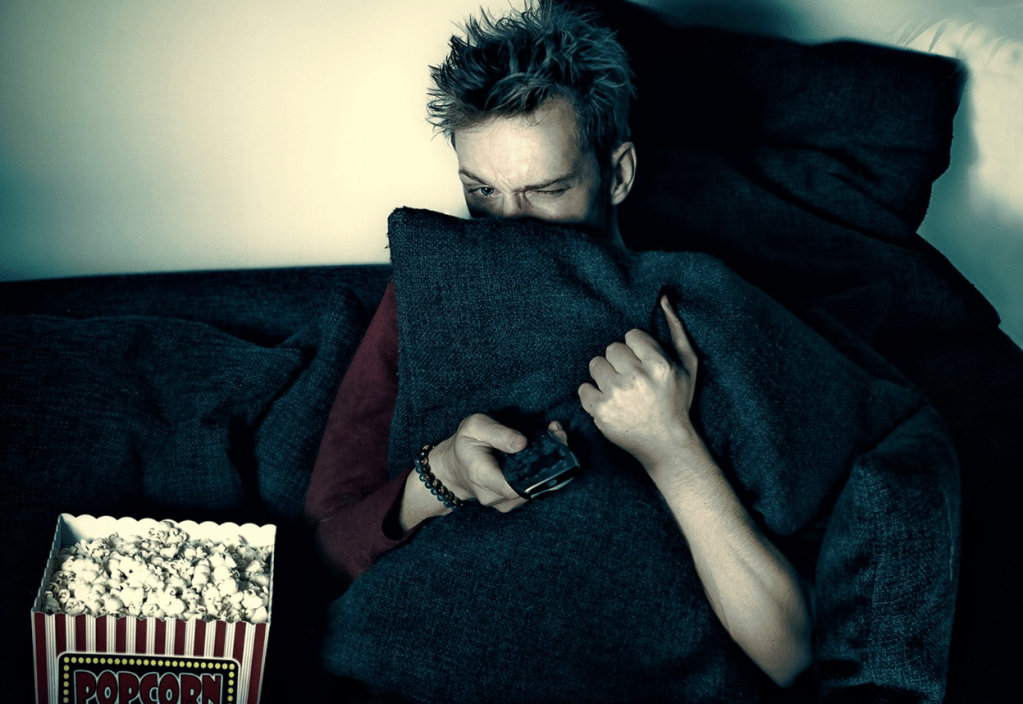
Most people avoid fear in everyday life. Yet millions of moviegoers continually return to dark theaters to watch films designed to terrify them — from supernatural hauntings to brutal slasher stories. Despite the fear they provoke, horror remains one of the most successful genres in modern cinema, raising a simple question: why do people we enjoy being scared?
It’s an understatement to say that horror films are intentionally designed to provoke strong emotional reactions in viewers. As film scholar Martin explains, “The primary aims of the horror film are to frighten, shock, horrify, and disgust using a variety of visual and auditory devices, including references to the supernatural, mutilation, blood, death, darkness, and the unknown.” Despite these ostensibly negative emotions, the genre continues to grow in popularity. According to data from Nash Information Services, horror films’ share of the movie market has increased from roughly five percent to about ten percent since the mid-1990s. Recent box office figures are even more impressive for the genre. According to The Numbers, horror films generated about $1.35 billion in North American box office revenue in 2025, accounting for 15.5 percent of ticket sales and ranking as the third-highest grossing genre behind only action and adventure films.
Researchers suggest that the answer lies in the unusual physiological combination of fear and enjoyment that horror creates. Horror experiences trigger the body’s sympathetic nervous system, producing reactions such as increased alertness, faster breathing, and heightened emotional arousal. In controlled settings like horror films or haunted houses, this arousal can be interpreted not only as fear but also as excitement. Psychologists sometimes describe this mixture of fear and enjoyment as “recreational fear.” Filmmakers often achieve this effect using both visual and auditory techniques. Unnerving sounds, eerie music, and the all-too-familiar “jump scare” — a loud noise following a moment of silence — are commonly used to heighten suspense and trigger fear responses.
Beyond the immediate thrill, horror may also serve a deeper psychological purpose. Some researchers suggest that frightening stories allow audiences to confront disturbing ideas in a safe environment. Prolific horror writer Stephen King has argued that frightening stories give audiences a way to symbolically confront and master fears such as death. Some research suggests this exposure may even help people manage real-world stress. One study found that people who regularly consumed horror during the COVID-19 pandemic reported lower stress than those who didn’t.
Psychological research also suggests that viewers approach horror films with different motivations. According to Wesselmann and colleagues, four common motives explain why people watch the genre: thrill watching (the excitement of being scared), gore watching (interest in violent or graphic imagery), independent watching (using horror to confront anxiety or assert individuality), and problem watching (using horror as a distraction from personal struggles).
Individual personality traits can also shape how audiences respond to frightening content. One factor researchers often examine is morbid curiosity, an interest in death, violence, and the kinds of disturbing or taboo subjects horror often explores. People who score high in morbid curiosity are more likely to seek out horror films, true crime stories and other threat-related media, often focusing less on death itself and more on the violent or unsettling events that lead to it.
Morbid curiosity also helps explain why some viewers enjoy particularly graphic or disturbing forms of horror. Studies suggest that people with higher morbid curiosity tend to find frightening scenes more exciting and enjoyable, especially when those scenes feel intense or uncomfortably real. At the same time, reactions to graphic imagery can vary widely between viewers. While some audiences are drawn to scenes involving blood, mutilation or other disturbing elements, others experience stronger feelings of disgust that can reduce their enjoyment of the film.
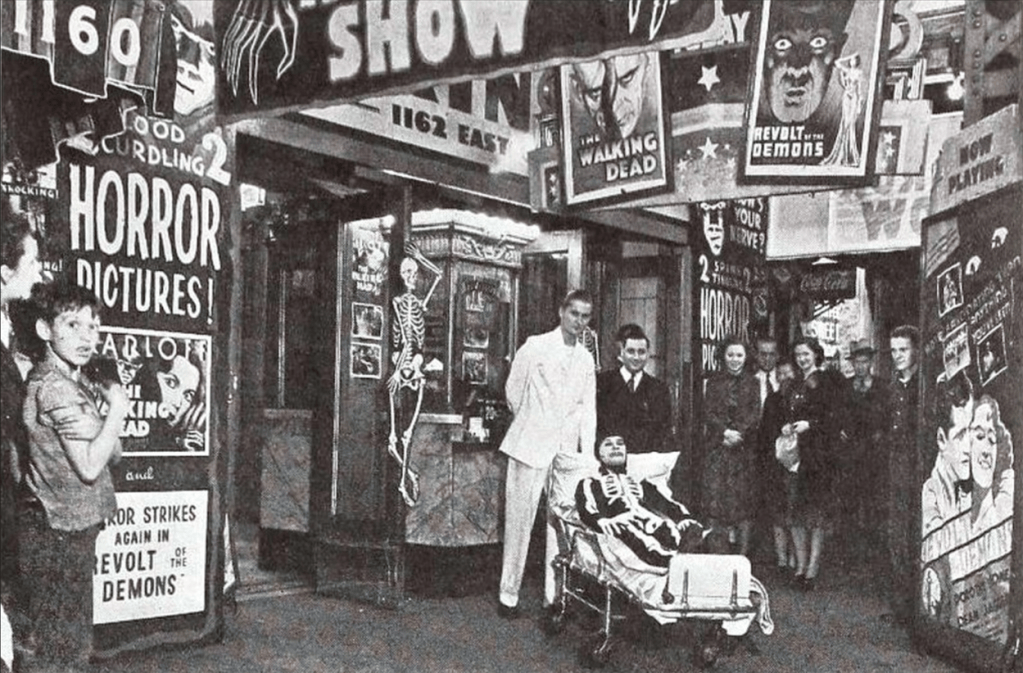
Image credit: theatre-talks / Flickr (Public Domain)
While horror affects viewers in different ways, the genre itself often taps into something larger. Horror films have long reflected the fears and anxieties of the societies that produce them. Rather than existing purely as entertainment, the genre often transforms contemporary anxieties into monsters, violence, and supernatural threats. In Hearths of Darkness: The Family in the American Horror Film, film scholar Tony Williams argues that “certain contemporary horror films suggest violence as the inevitable outcome of socially conditioned repression,” often placing the family at the center of these tensions. Rather than presenting horror as something external, these films frequently reveal that the source of fear originates within the family or society itself.
Throughout the genre’s history, filmmakers have used horror to explore cultural fears. George A. Romero’s Night of the Living Dead (1968), released during a period of political turmoil and racial conflict in the United States, shows social order breaking down as people turn on each other while trapped in a farmhouse as zombies close in from outside, suggesting that the real threat is not just the undead, but the fear and division within the group. Wes Craven’s The Hills Have Eyes (1977) reflects Cold War anxieties about nuclear testing and environmental devastation, imagining a family terrorized in a desert scarred by atomic experimentation.
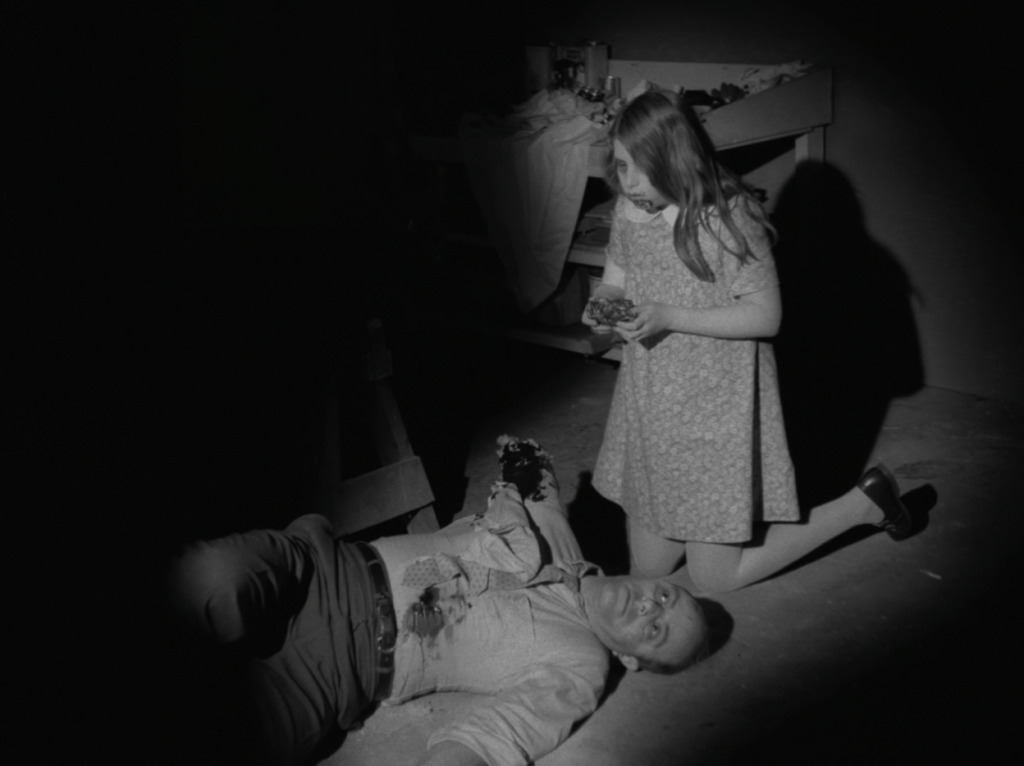
Image credit: George A. Romero / Wikimedia Commons (Public Domain)
Suburban horror of the late 1970s and early 1980s also exposed cracks beneath the image of the American dream. John Carpenter’s Halloween (1978) transforms quiet neighborhoods into sites of random violence, while Tobe Hooper’s Poltergeist (1982) suggests that the comfortable suburban home itself may be built on buried histories and hidden dangers. Similarly, Friday the 13th (1980) famously punishes teenage sexuality and rebellion, reflecting cultural anxieties about youth behavior and moral boundaries.
Other films shifted inward toward the family itself. Stanley Kubrick’s The Shining (1980) turns domestic space into psychological horror, while films like Rosemary’s Baby (1968) and Carrie (1976) explore fears surrounding religion, sexuality, and adolescence. By the 1990s, horror films increasingly focused less on external threats and more on perception, identity, and psychological experience, while also embracing self-aware, meta narratives that reflect on the genre itself—an approach that continues to shape modern horror today. These patterns suggest that horror does not simply reflect fear but exposes how social structures themselves can produce the very threats audiences fear.
Contemporary horror films continue this tradition but often focus less on external threats and more on psychological trauma, grief, identity, and social relationships. Ari Aster’s Midsommar (2019), for example, centers its horror on relationships and shifting power dynamics. In her analysis, scholar Cary Elza writes that Midsommar operates at “the intersection of emotion, community, and gender,” using affective design to challenge “the boundaries of emotional experience.” Rather than relying on darkness or sudden shocks, the film’s bright daylight setting and communal rituals create an unsettling sense of emotional immersion, gradually revealing the disturbing consequences beneath the community’s warmth and the shifting power dynamics within it.

Image credit: 01tonythomas / Wikimedia Commons (CC BY-SA 4.0)
As horror continues to grow in popularity, filmmakers are increasingly experimenting with more psychologically intense and emotionally unsettling stories. Recent films such as Skinamarink (2023), a minimalist, atmosphere-driven horror film; Talk to Me (2023), a supernatural story tied to social media and youth culture; and I Saw the TV Glow (2024), a psychological horror film centered on gender identity and the way people engage with media, suggest the genre is moving toward more experimental and emotionally focused storytelling.
This shift is not limited to film. Online horror creators and game developers are also experimenting with minimalist and atmospheric forms of fear. Kane Pixels’ viral analog horror series The Backrooms has amassed tens of millions of views on YouTube and has now been adapted into a feature film by A24, while liminal horror games like Superliminal and Pools attract large audiences both through gameplay and the millions who watch them via streaming and “Let’s Play” videos. As audiences continue seeking powerful and unsettling experiences, horror creators across different forms of media are likely to keep pushing the boundaries of how fear is presented and consumed.
From Cold War paranoia and suburban unease to grief-stricken cults and viral internet nightmares, the horror genre has continually reinvented itself to reflect the anxieties of its time. At the same time, research suggests audiences are drawn to the genre for the complex emotional experience it offers—allowing viewers to safely explore fear, curiosity, and discomfort. As filmmakers continue experimenting with new ideas and storytelling approaches, horror remains one of cinema’s most adaptable and compelling genres.
Sources
Elza, C. (2023). Do you feel held? Gender, community, and affective design in Midsommar.
Kiss, M., et al. (2024). The role of excitement and enjoyment through subjective evaluation of horror film scenes.
Martin, G. N. (2019). (Why) do you like scary movies? A review of the empirical research on psychological responses to horror films.
The Numbers. (2025). Movie genre market share. https://www.the-numbers.com/market/genres
Wesselmann, E. D., et al. (2024). Exploring the motives for watching horror movies: A replication and extension.
Williams, T. (1996). Hearths of darkness: The family in the American horror film. Fairleigh Dickinson University Press.


Leave a Reply